 |
| Created by Kimberly Kline, API |
Equal Pay for Equal Work.
Definitely seems like an easy concept to grasp. When two people are doing the same job, and bring to the table equal skills, then they should be paid the same.
But this is not the reality for many working women. Instead, we are low-balled when getting hired, and continue to be underpaid as compared to our male contemporaries (definitely something that would not fly if it happened due to race or religion!).
Screams of discrimination, doesn’t it?
Even right out of college, women are paid less than men. And the gap only continues to widen as we get older.
Despite some shifts, women are often the primary caregivers when it comes to children and even dependent parents. Taking time off for pregnancy, or other family leave issues, also impacts our earnings.
We have been fighting for decades to close, and ultimately eliminate, this pay inequity.
Making less hurts us. No matter if we are single, married, or have a family, earning less has an effect. But if we are the primary or sole wage earner, the problem is even greater.
This wage disparity also limits our retirement funds. Because we make less, we are able to save less, both for short and long term needs. And if we have a 401k, our lower base salary means that less is being contributed.
You can find out more about the effects of wage disparity on women here!
But we are not in this alone.
The EEOC (Equal Employment Opportunity Commission) has also joined the fight. In an effort to address pay inequality, companies have been ordered to release their pay data by the end of 2016. It is hoped that by having this information, the EEOC will be also to identify companies who are guilty of wage bias.
While some companies may already know they are paying their women employees less, some may be unaware. That is why bringing this to light by taking a clear look at a company’s pay data makes sense.
However, the government is notoriously slow moving when it comes to enacting real change.
This is where states need to step in ~
and some have answered the call!
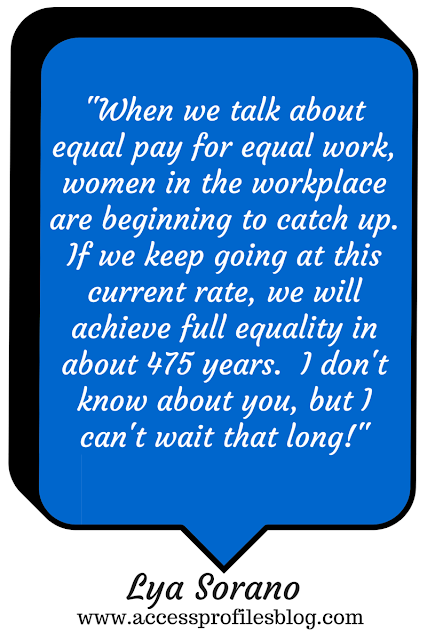
States Joining Fight for Equal Pay! “Tweet This”
The state of Massachusetts has recently enacted the toughest equal pay law in the country.
In addition to an emphasis on pay equity, this law forbids companies from asking their prospective employees what they are making at their current job.
The idea here is to eliminate the perpetuation of underpaying women.
Often times, women start out making less. It makes sense then that if every new employer can base their salary offer on what we made before, we will continue to be underpaid.
Instead, if employers are prohibited from asking salary history, then that cycle has a better chance of being broken.
The MA law, and similar laws in other states, also bans pay secrecy. Employers in those states can no longer keep their employees from discussing salaries. And these employees also have recourse if they are fired because they shared what they make with others.
Some companies believe that keeping salaries private is necessary to curbing resentment from those that make less. But instead, pay transparency is seen as a way to reveal wage inequality and help close the pay gap.
When employees are permitted to be completely open about what they make, pay inequity is less likely. It can also make employers more vigilant in their efforts to pay women equally.
The Massachusetts law has even taken it a step further. In addition to requiring that men and women who have the same job be paid the same, it also requires that those in “similar” positions are as well. “Similar” is defined as any jobs where the duties require the same skills and responsibilities. Job title alone cannot be a factor.
Often included in these equal pay packages are things like more flexible work schedules, child care considerations, and paid family and sick leave. These policies would help all employees, not just women.
Advocates for equal pay
are campaigning for other states
to join Massachusetts and pass
stronger pay equity laws.
In the meantime, responsible and proactive companies can help.
By actively reviewing your own pay policies, you can ensure that you are not guilty of wage bias.
You can also take a look at your job applications and re-train any employees involved in the hiring process to make sure that they do not ask for salary history. And if you currently have a company policy prohibiting your employees from discussing salaries, eliminating that from your handbook would also make sense.
Taking these steps gives you the chance to make any necessary changes now, before you draw the attention of the EEOC or your state passes their own pay equity law.
You will also help establish your company
as a fair and conscientious employer.
And what a boost to your brand that would be!
Authored by

Ready to update your Hiring Policies or start your own Small Business Blog?

Find more information
About Us and Our Services too!

No comments:
Post a Comment
Thanks for visiting our website. Contact Us! We can answer your questions and offer you a consultation on how we can help You with your Hiring, Business, and Security Needs!
We also invite you to Subscribe. Just leave your email and you will get one new article each month with tips and information focused on You and Your Business!